
Name what has changed
Describe the moments that now need more help: getting up, bathing, meals, appointments, repeated questions, unsettled evenings, or being alone while family is at work or asleep.
When familiar routines are getting harder to hold together, build support around the parts of the day that need a calmer, more reliable plan.
Talk through your situation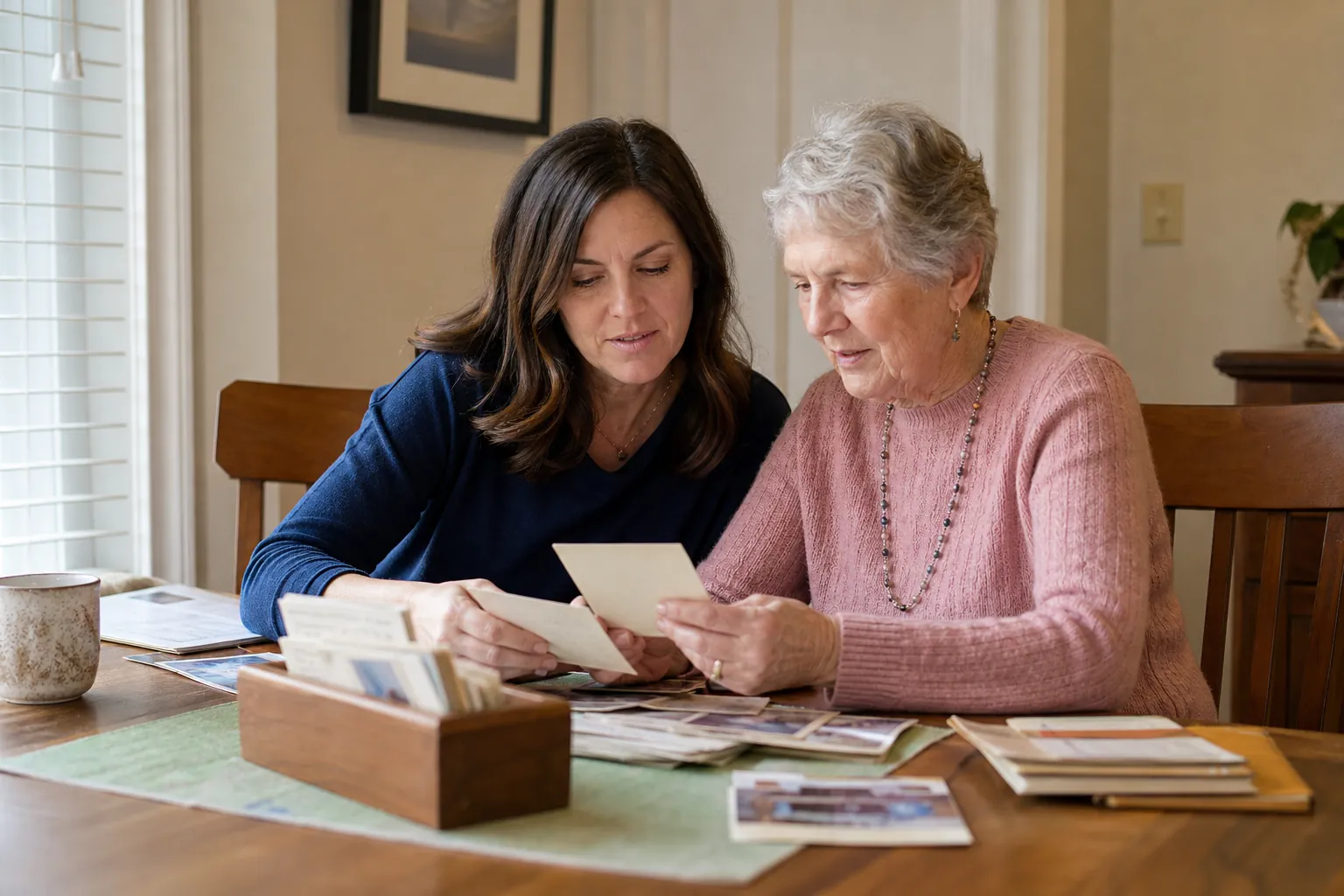
Dementia can change a household one small moment at a time. A meal takes more prompting. Getting dressed needs another set of hands. An evening routine becomes unsettled. The family member who has been filling every gap starts losing sleep, missing work, or wondering whether it is still safe to leave a loved one alone.
OPA helps families talk through the actual support needed at home. The first conversation begins with the routines that are difficult now, the hours family can cover, the people already involved, and the practical details that need a dependable plan.
See how care startsA useful care plan respects familiar routines while making sure one person is not quietly responsible for every difficult hour.
Describe the moments that now need more help: getting up, bathing, meals, appointments, repeated questions, unsettled evenings, or being alone while family is at work or asleep.
Talk through the practical help needed, the timing, the person’s preferences, and the clinical directions that shape the day. Caregivers support the routine, while diagnosis and treatment questions stay with the clinician.
OPA confirms the agreed schedule, caregiver support, and start details before care begins, so the family has a clear handoff instead of an assumption about who will be there.
Families often wait because they are trying to protect a loved one’s independence. That instinct matters. So does noticing when the old routine now depends on one exhausted person remembering every detail, arriving at every meal, or staying close because the day no longer feels predictable.
The need for support is not a verdict on the person living with dementia or on the family. It is a practical question: which parts of the day have become hard to manage safely, consistently, or without draining the people who love them? The answer may be a few difficult morning hours, a dependable presence while a spouse works, help after an appointment, or a more consistent arrangement as needs grow.
Write down what happens over several ordinary days. Note when the routine goes smoothly, where the family has to step in, what creates stress, and who is available. This is not a clinical record. It is a household view of the work that needs to be covered.
Clear patterns make the care conversation more useful. They also make it easier to separate a routine that needs additional support from a new health concern that belongs with the treating clinician.
In-home dementia care is not one fixed schedule or a substitute for clinical care. It is practical help built around the person’s usual day and the tasks that have become difficult to manage alone. Depending on the established plan, OPA can discuss support with personal routines, meals, companionship, transportation, light housekeeping, mobility, and medication reminders.
Familiarity can matter. A consistent routine, a familiar way of taking breakfast, a preferred chair, or a calm approach to getting ready can make a difficult part of the day feel less confrontational. OPA’s role is to help arrange practical support around those routines while the family and clinical team continue to guide medical decisions and treatment.
For a loved one who needs help with everyday tasks but is still mostly safe at home with planned coverage, personal care at home may be the right starting point. When a hospital stay, illness, or sudden change has created short-term pressure, short-term recovery care can help the household organize the first days. If a person should not be left alone for long stretches, it may be useful to discuss live-in care or 24-hour home care alongside the family’s real coverage gaps.
A broad instruction such as “keep an eye on Mom” leaves too much for one person to interpret. A useful plan names the routines, preferences, and responsibilities that matter. It can be simple: who helps with breakfast, who takes the person to an appointment, how an unsettled evening is handled, and who calls the clinician when something is new or concerning.
The family integrator is often the relative doing the invisible coordination: updating siblings, keeping track of the schedule, answering the phone, and noticing whether a plan is beginning to fray. Giving that work a visible place can reduce the pressure on one person and make it easier for siblings or trusted friends to help in concrete ways.
OPA’s Care Coordination Grid can help a family keep appointments, contacts, recurring tasks, and handoffs in one shared view. It is a family planning tool, not a medical record. Its value is straightforward: fewer details get lost in separate texts, and a responsibility that has no owner becomes easier to see before it becomes an emergency.
Dementia care at home works best when practical support and clinical direction are not blurred together. A caregiver can help the household follow an established routine and report practical observations to the family according to the care plan. New symptoms, sudden changes in thinking, pain, breathing trouble, a fall, fever, medication questions, or a change in function need the appropriate clinician’s guidance.
Call 911 for an immediate emergency, including signs of stroke, severe breathing trouble, unconsciousness, a major injury, or immediate danger. For a new but non-emergency change in behavior, confusion, mobility, sleep, or comfort, contact the treating clinician the same day and follow the individual guidance already in place. More hours of practical care should never be used to cover up a medical concern.
Many care arrangements look workable until the person carrying them gets sick, has to travel, or simply cannot keep waking up every night. Planning for relief is not stepping away from a loved one. It is what gives the household a chance to keep showing up with patience and attention.
Start by identifying the hours that are hardest to cover. That may be a workday, a bathing routine, an appointment, a night when a spouse needs uninterrupted sleep, or a recurring time when the person becomes unsettled. Then name a primary person, a backup, and the practical information each person needs. A small, reliable plan is more useful than a long list of good intentions.
Families who want additional planning tools can explore the Operational Reliability Series, published by Alder Creek Editions. The series follows the handoffs and responsibility families carry when care changes, while OPA remains focused on practical support at home.
You do not need to arrive with every decision made. The best first call is concrete rather than polished. Share what has changed, what the day looks like now, when help is needed, and who else is involved. If a clinician has given the family instructions that shape daily routines, have those available as well.
OPA can then discuss the practical support requested, the schedule that may fit, and the details needed to confirm a workable start. There is no benefit in promising a care arrangement before the family’s real needs and the available support are understood.
OPA can discuss practical support with the routines that have become difficult, such as personal care, meals, mobility, companionship, transportation, medication reminders, and the hours family cannot cover. The right plan depends on the person’s needs, household routine, and the support that can be arranged.
If a family is facing a new safety concern or a sudden change, contact the appropriate clinician for medical guidance. OPA can also discuss the practical support needed at home, the timing, and what is available before a care schedule is confirmed.
A caregiver can provide a steady presence, help with familiar routines, and share practical observations with the family according to the care plan. New or sudden confusion, pain, breathing trouble, a fall, or other medical concerns should be brought to the treating clinician. Call 911 for an immediate emergency.
Start with what has changed, the routines that now need help, the hours family can cover, the people involved, and any clinical directions that shape the day. A clear picture of the hard moments helps the first conversation stay practical.
Talk through the routines, coverage gaps, and practical support your family needs at home.